


An atmosphere of nervous excitement. Apparent is the chilled vapour coming from my competitors as they execute the "about to run" shuffle on the beginning point.
A quick twitch of the hips.
I'm lined up for my local Saturday morning race and I'm serious. It's almost time...
Wait a second. I have to start my device. The same goes for the runner next to me.
The person in the line expresses impatience. I'm not moving until… done! Connection established, I'm off.
Amidst the crowd, it's hard to see a arm without a fitness tracker on it. And this extends beyond us runners who use them.
We're witnessing a explosive, multi-billion dollar sector. Companies like Garmin lead the market, each with an extensive range of different models to suit a variety of lifestyles. Based on how feature-packed the model you choose, prices can vary between a hundred pounds to thousands of pounds.
"I find it infuriating, I can't relax."
"It provides solace… It acts as a friend encouraging me."
"I wish it wouldn't say I've had a bad night's sleep."
A handful of the responses people have shared from fellow device users when I ask what they feel about theirs.
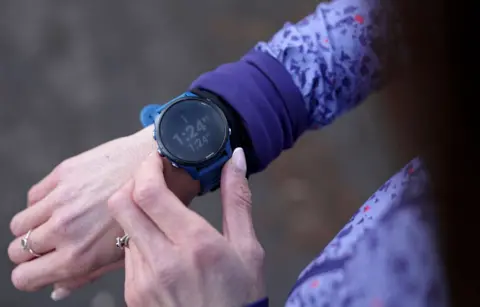
The Data Dilemma
My feelings on mine? At this moment, irritating. It's telling me my speed is wrong, leading me to doubt whether the trees I'm running below are blocking my GPS connection.
Countless individuals of us fasten these little devices onto our wrists and wear them all day and night, apparently unconcerned with the fact they're perpetually tracking us.
Gone are the days when we used them only to give us an estimation of our step count. Currently, they can measure our nightly rest, heart rate, glucose levels, our VO2 max.
It's a challenge to find a bodily function they don't track.
But can they do what they say they do? And are the data points we scrutinise a true reflection of reality? Do they boost our mental and physical wellbeing, or do the plethora of readings and constant notifications just contribute to our everyday anxiety?

A Love-Hate Relationship
"I become a a little preoccupied with mine," an individual reveals.
While she appreciates how her device monitors her workouts, she finds some of its other features "excessive" at times - a feeling initially realised during a significant period.
Before she realised she could adjust the settings, her smartwatch repeatedly informed her she was being insufficiently active enough. In a new phase, the watch frequently reports her she's had a poor sleep score.
"I am caring for a six-month old, it's unnecessary for me to be notified I've not slept," she says. "I know that perfectly well."
Couldn't she just remove it?
"It's possible, perhaps, but I've got this complicated dynamic with it," she explains. "I love it for its exercise data, I sometimes question whether the myriad other functions it can now do is maybe too much for me."
Inside the Device
Different brands of smartwatch has its own proprietary way of monitoring your bodily functions and analysing your data, but the most use optical sensors on the back of the watch.
They commonly project tiny, coloured LED lights onto your skin which can monitor capillary action, recording your pulse rate. Higher-end devices analyse changes in the electrical current that passes over the skin to get an idea of your recovery state.
The Professional Viewpoint
A data scientist says that for most people for smartwatches, it's a "fine balance" - while the rapidly advancing tech could actually save lives, "identifying issues before we feel unwell", it could also turn us watch wearers into the "worried well".
He points out that the most advanced wearables can conduct tests like heart rhythm analysis, which constantly monitor how normal the heart is. They can notify if someone is experiencing an irregular rhythm, where there is irregular electrical activity in the heart causing an irregular heartbeat.
This does not automatically signal someone is on the verge of a cardiac event, but it can give an early warning they might be more susceptible of a blood clot in the future.
But how to make sense of these numbers is complicated. The expert fears that as further capabilities are added, people may not be able to fully understand their data.
"I have some doubts that the ability to monitor so many metrics is such a beneficial thing," he says.
A professor specialising in wearable tech concurs. Research into the influence of wearable tech on a specific group of cardiovascular patients suggested a minority of those who were given devices to monitor their cardiac function experienced increased anxiety and were "more inclined to use doctor's time".
She identified a vicious circle with her patients - they saw a alarming metric on their watch. They became worried. Their BPM rose. They got more worried. They checked again, and their anxiety increased again.
"When people are presented with data about ourselves that we can't properly interpret then, of course, we are going to seek clarification," the psychologist says. "We look, we re-check - it becomes a vicious cycle."


